
Aileron differential on RC airplanes can confuse beginners — you might hear the term at the field or see it in your transmitter menus, but not be sure what it actually does or whether your model needs it.
In simple terms, aileron differential means your ailerons move more in one direction than the other. Most commonly, the ailerons are set so they deflect more upward than downward. You’ll also see this called differential ailerons.
What Aileron Differential Does
Aileron differential exists for one main reason: to help reduce adverse yaw and produce cleaner, more “coordinated” turns — especially on aircraft that naturally want to swing the nose the wrong way when you bank.
It’s most useful on some trainers, many warbirds, and aircraft with lots of dihedral or drag — but any RC plane can show adverse yaw depending on the wing, aileron setup, airspeed, and how aggressively you roll into turns.
Adverse Yaw Explained (Why Turns Can Look “Messy”)
Adverse yaw happens when the airplane’s nose doesn’t point where it should during a banked turn. Visually, the model can look like it’s turning slightly away from the direction of the bank, and you may also notice the tail “dropping” through the turn.
The cause is drag imbalance: the downward-deflected aileron increases lift on that wing, but it also increases drag. That extra drag tries to pull the aircraft back the other way, fighting the turn.
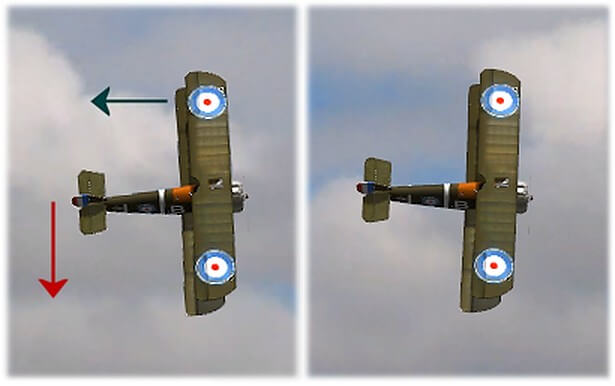
If you fly scale-style models or WWI/WWII warbirds, this effect can be more noticeable because they often carry more drag and don’t always like being “aileron-only” turned.
Best Fix: Coordinated Turns (Aileron + Rudder)
The “real pilot” fix for adverse yaw is simple: apply a small amount of rudder in the same direction as the turn while you use ailerons. This keeps the nose tracking properly and makes turns look smooth and intentional.
If you’re still learning, you can also use aileron-to-rudder mixing on a computer transmitter so a little rudder is added automatically when you move the aileron stick. It’s not perfect for every aircraft, but it’s often a very effective shortcut for trainers and everyday sport planes.
Product note: if you’re shopping for gear, a computer radio transmitter with mixing and differential menus makes setup much easier.
Alternative Fix: Set Up Aileron Differential
Aileron differential is the other common solution — especially if your model has a strong tendency to “tail drop” in turns, or if you’re flying without rudder control (for example, aileron + elevator only).
How to Set Differential on a Modern Transmitter
If your plane has two aileron servos (one per wing), most modern radios offer an “aileron differential” menu option. You simply choose a percentage so down aileron is reduced compared with up aileron. Check your radio manual for the exact steps.
A solid starting point is often around 30% differential, then test-fly and adjust. Some aircraft want more, some want very little, and some don’t need it at all — it’s a trial-and-error tuning process.
Single-Servo Ailerons: Mechanical Differential
If you have one servo driving both ailerons, you can still create differential mechanically by using a circular servo horn / servo disc and placing the pushrod connection points slightly off the servo arm’s centreline.
This off-centre geometry makes the up-going aileron travel a bit more than the down-going aileron, even though the servo rotates the same amount each way.
Exactly which direction you offset the holes depends on the aircraft layout (high wing vs low wing) and where the servo is mounted. If you’re unsure, move in small steps and check that you are getting more up than down aileron on both sides.
How Much Differential Should You Use?
There’s no universal number — it depends on the model. As a rough guide, many pilots aim for something like half as much down as up, then fine-tune.
When testing, focus on how the aircraft tracks in a steady, banked turn. If the nose yaws the wrong way or the turn looks “scrubby,” increase differential slightly (or add a touch more rudder coordination / rudder mix). If roll response feels weak or odd, you may have too much differential.
Clean turns are the goal — whether you achieve them with better coordinated flying, radio mixing, aileron differential, or a combination.
All of this and much more is covered in our Beginner’s Guide 👇
The Beginner’s Guide To Flying RC Airplanes is a 139-page, easy-to-read e-book written for complete newcomers. It explains exactly what to buy, how to set it up, where to fly and how to avoid the classic mistakes that wipe out so many beginners.